Slip disc, otherwise referred to as herniated disc or prolapsed disc, is a medical problem that causes lower back pain and can impact one’s day-to-day activities. However, most patients recover successfully from this problem through non-surgical intervention.
What Is a Slip Disc?
The human spine consists of vertebral bones protected by discs of soft tissue. In the case of a slip disc, the soft discs slip out of position, resulting in pain and discomfort.
Symptoms of Slip Disc
- Lower back pain or neck pain
- Pain that extends to legs or arms
- Numbness and/or tingling
- Muscle weakness
- Movement difficulties
Prompt action needs to be taken before it becomes worse.
Reasons behind Slip Disc
- Improper posture
- Accidental heavy lifting
- Sedentary life
- Aging leading to degeneration
- Strain injuries
Is It Possible to Treat Slip Disc without Surgery?
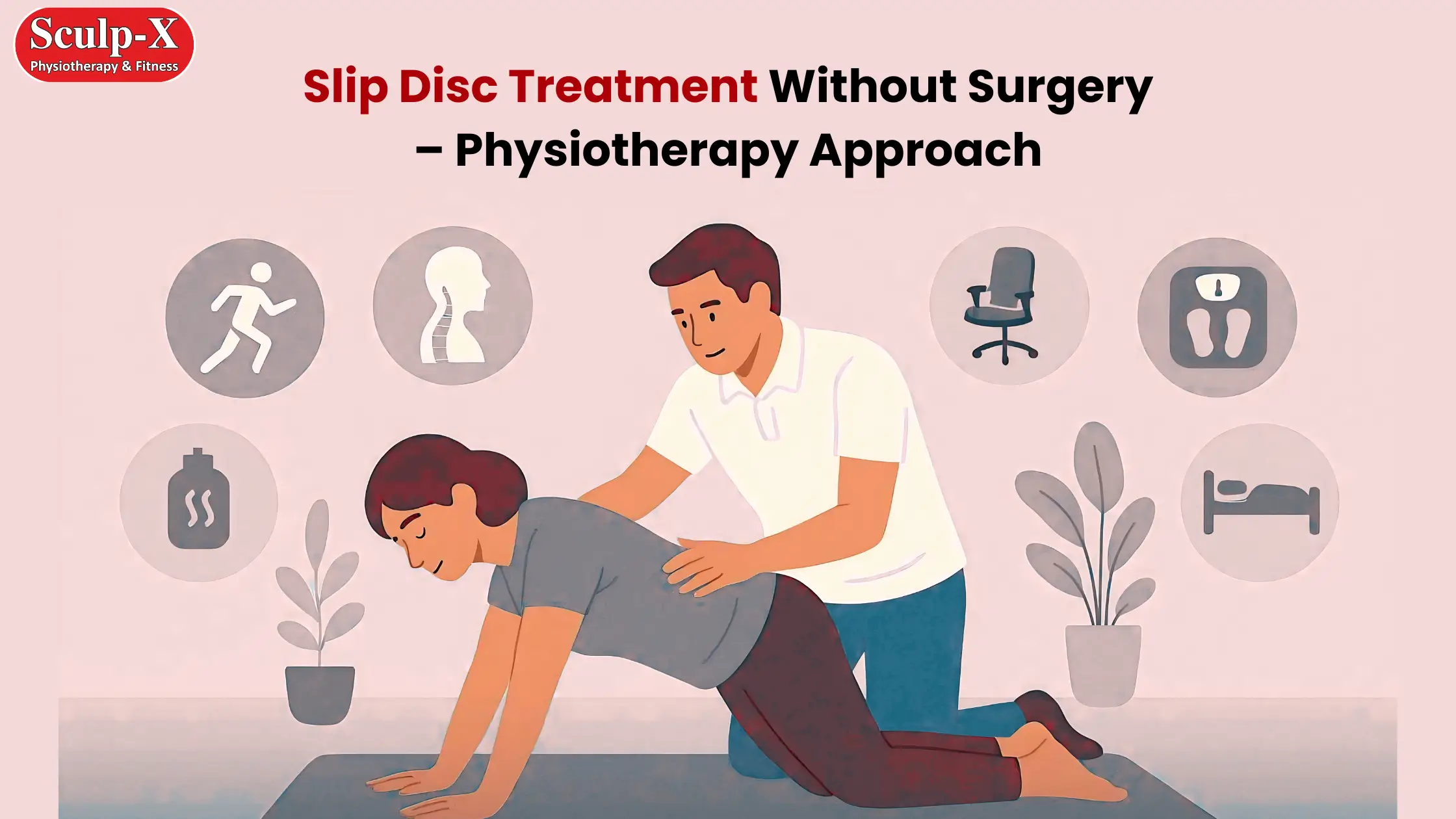
Yes, in most cases, slip disc can be treated successfully without surgery. Physiotherapy is very useful in providing relief from pain, enhancing mobility, and strengthening the spine.
Physiotherapy for Slip Disc
Therapy for Pain Reduction
The first step in treating slip disc involves alleviating pain and inflammation through:
- Electrotherapy (IFT, TENS)
- Heat or ice treatment
- Manual treatment
Provides quick and safe relief from pain.
Stretching and Mobility Exercises
Simple stretches can be useful in:
- Reducing nerve compression
- Increasing flexibility
- Re-establishing mobility
Your exercises will be tailored to fit your particular situation.
Strengthening Exercises
Core and back muscle strength are crucial for successful rehabilitation.
- Supports the spine
- Protects against future injuries
Exercise Focus
Among the most important exercises is the improvement of spinal stabilization. The following example can be used to demonstrate this idea:
Though seemingly simple, it demonstrates the importance of proper alignment, such as proper posture, in relation to spinal function and loading.
Correction of Posture
Bad posture is one of the reasons for slip disc disease. Physiotherapy helps with:
- Sitting posture
- Body posture
- Work environment posture
To avoid pressure on the spinal cord.
Modifying Lifestyle
Good lifestyle habits will also help in the process of treatment, such as:
- Not lifting heavy things
- Keeping your weight balanced
- Physical exercise
- Using correct posture while sleeping
Time Required for Recovery
Time needed for recovery may differ according to severity but generally takes:
- Two to six weeks with physiotherapy treatment
- Six to twelve weeks to recover completely
Persistence plays an important role in achieving long-lasting outcomes.
When is Surgery Required?
Surgical treatment will be recommended in cases where there is:
- Lack of bladder and/or bowel control
- Severe nerve impingement
- No response to lengthy treatment
The majority of patients make a full recovery without the need for surgical intervention.
About Sculp X Physiotherapy and Fitness Clinic
At Sculp X Physiotherapy and Fitness Clinic, clients will benefit from a professional team providing physiotherapy treatment for slip disc and spine conditions.
- Pain relief treatments
- Tailored exercise routines
- Postural correction and rehabilitation training
- Experts in sports injuries and spinal conditions
Our clinic aims to help patients recover, live pain-free, and become stronger through our non-surgical techniques.
Conclusion
Slip disc may be painful, but not all cases require surgery. The appropriate physiotherapy and exercise program can help you recover without difficulty and avoid complications in the future.
If you are suffering from back pain or slip disc symptoms, physiotherapy will surely work wonders for you.